- Arrivals and meet-up in Paris.
Night: Paris
Egypt Expedition
Open the day-by-day schedule.
Local times · Egypt = Paris +1 h · tap a place › for details
Night: Paris
Night: Hôtel d'Égypte Autrement, Luxor (included in package)
Night: on board
Night: on board
Night: on board
Night: hotel in Abu Simbel (supplement 95 € + 75 € per person)
Night: on board
Night: hotel in Luxor
Night: apartment in Alexandria — address
Night: apartment in Alexandria
Night: Lemon Spaces, Zamalek — address
Night: Zamalek
Night: Zamalek
Night: Zamalek
Night: Zamalek
Night: Zamalek
 Karnak TempleDay 3
 Luxor TempleDay 3
 EdfuDay 3
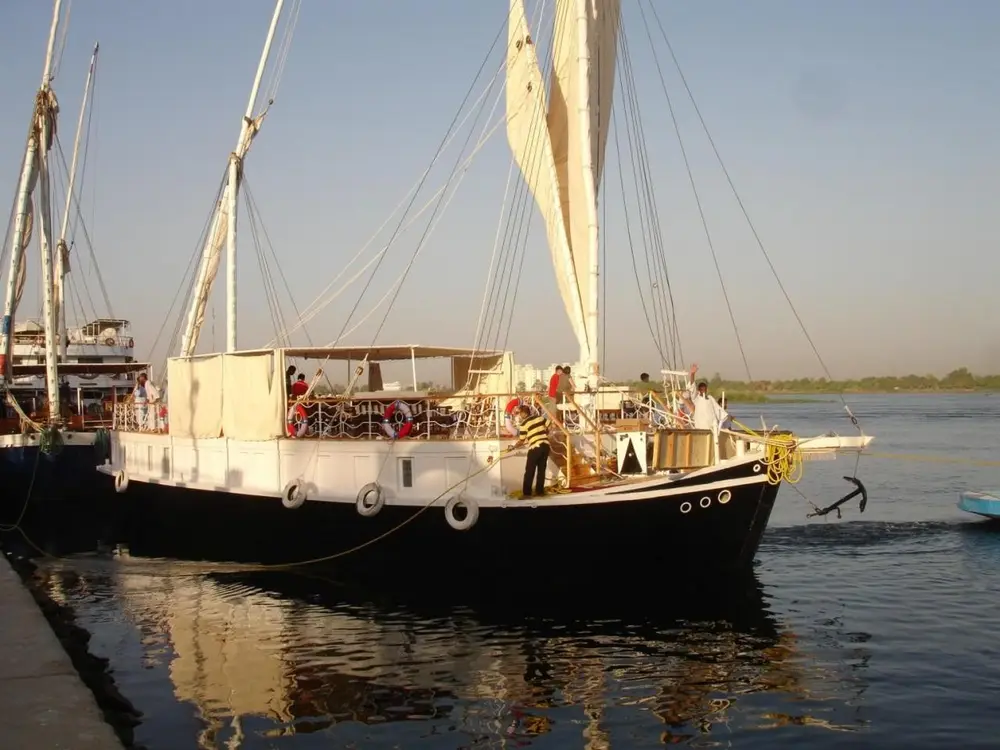
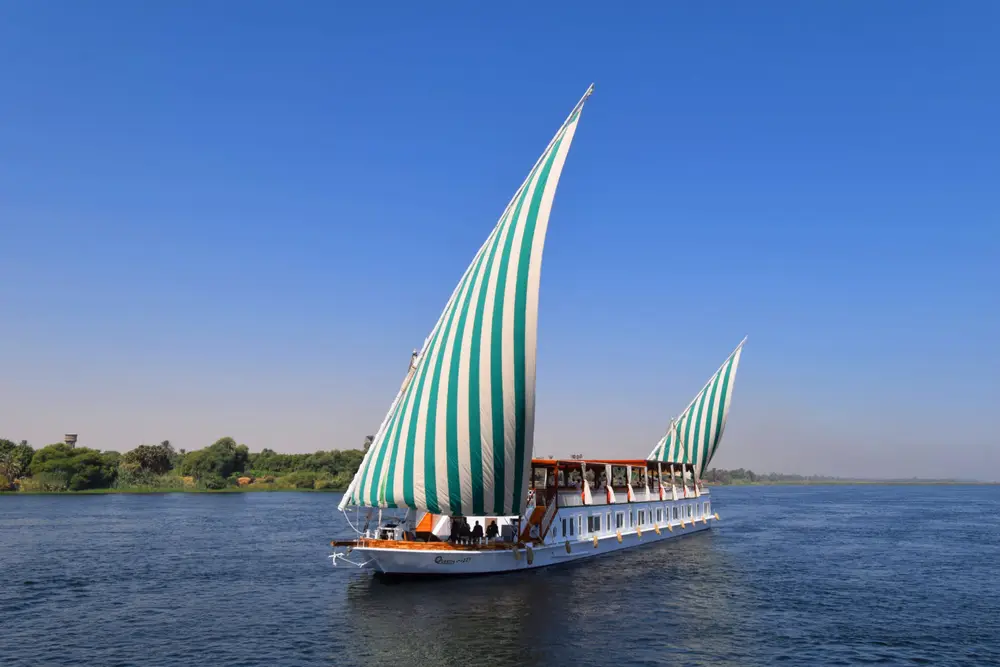 Dahabieh / SandalDays 3–7
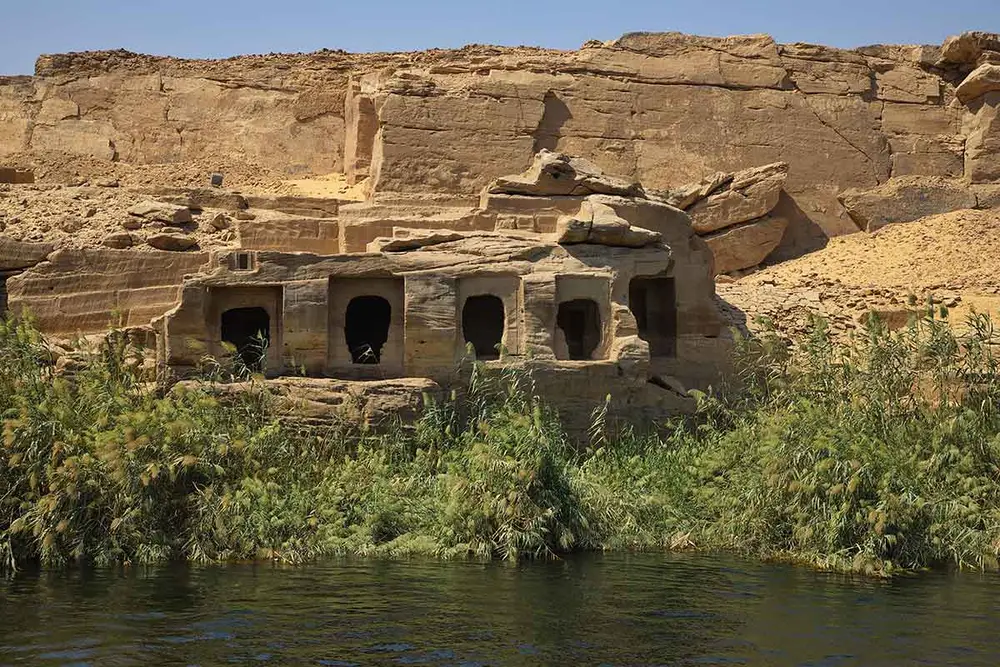 Gebel el-SilsilaDay 5
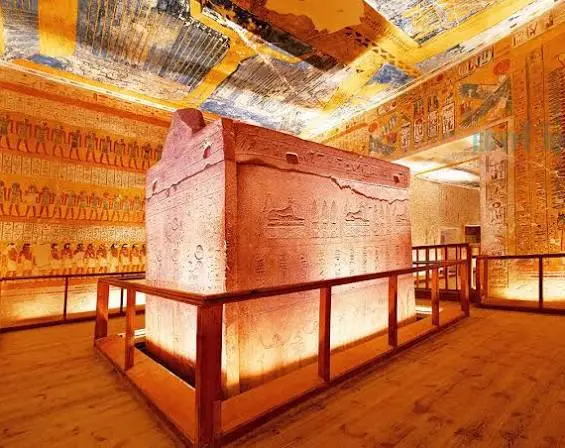 Valley of the KingsDay 8
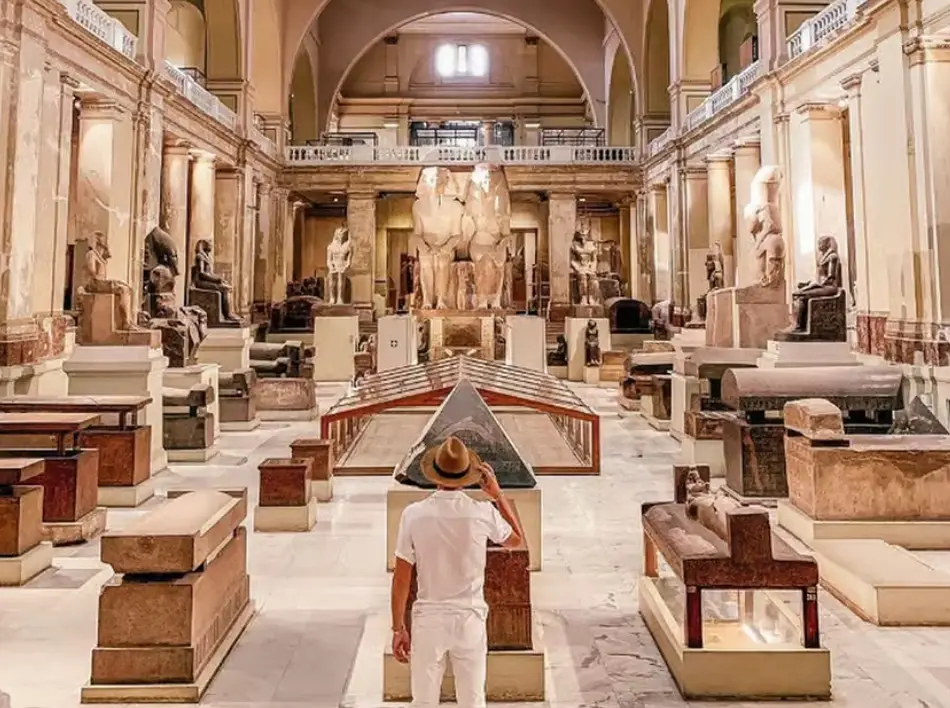 NMECDay 12
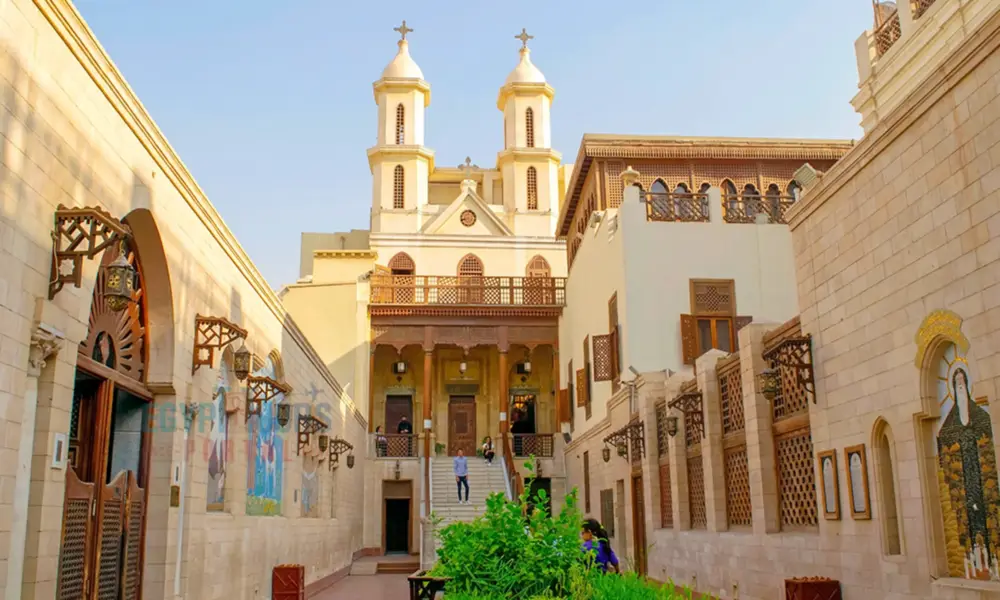 Coptic CairoDay 12
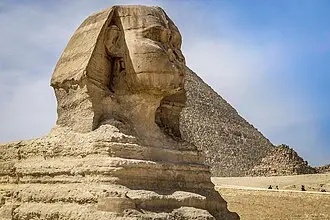 Pyramids & SphinxDay 13
Grand Egyptian MuseumOptional
For 24, 25, 26 (morning) and 28 November.
Fleet Limousine — airport pick-up 21 Nov, Alexandria → Cairo 23 Nov
WhatsApp +20 102 227 7717
El Omaraa Palace Building, 10th floor, apartment 1001
13 Motosh Basha St., Bahary — next to Kesm El Gomrok (Customs Department)
Lemon Spaces — Unit 608, Iconia Zamalek
Mohamed Thakeb Street, Zamalek, Cairo
| 14 Nov | easyJet EJU 4593 CDG → LXR | |
| 21 Nov | Nile Air NP72 LXR → CAI | 82G84T |
| 22 Nov | GetYourGuide, Alexandria tour | GYGFWVX66X85 |
| 29 Nov | easyJet EJU 4582 SPX → CDG | KD4FPFJ |
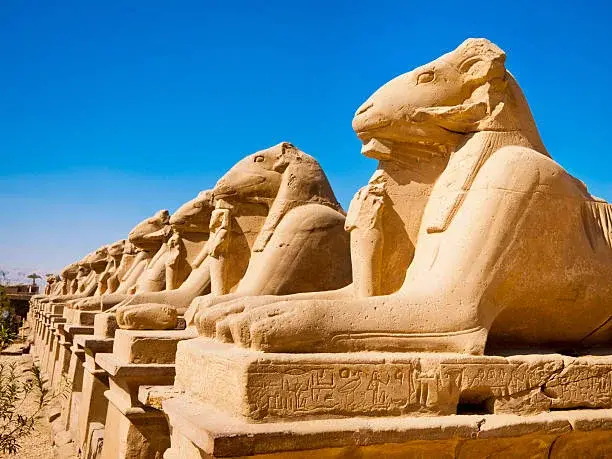
The largest religious site ever built. On the east bank of the Nile in Luxor — ancient Thebes — over 200 structures were raised, torn down and rebuilt by dozens of pharaohs across nearly 2,000 years. It's less a temple than a city of the gods.
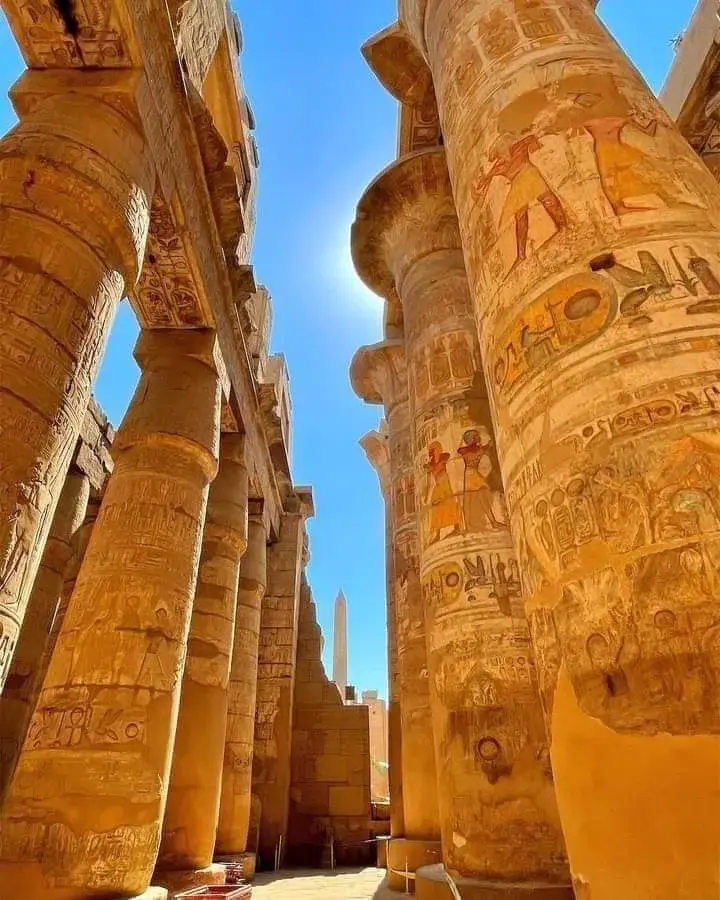
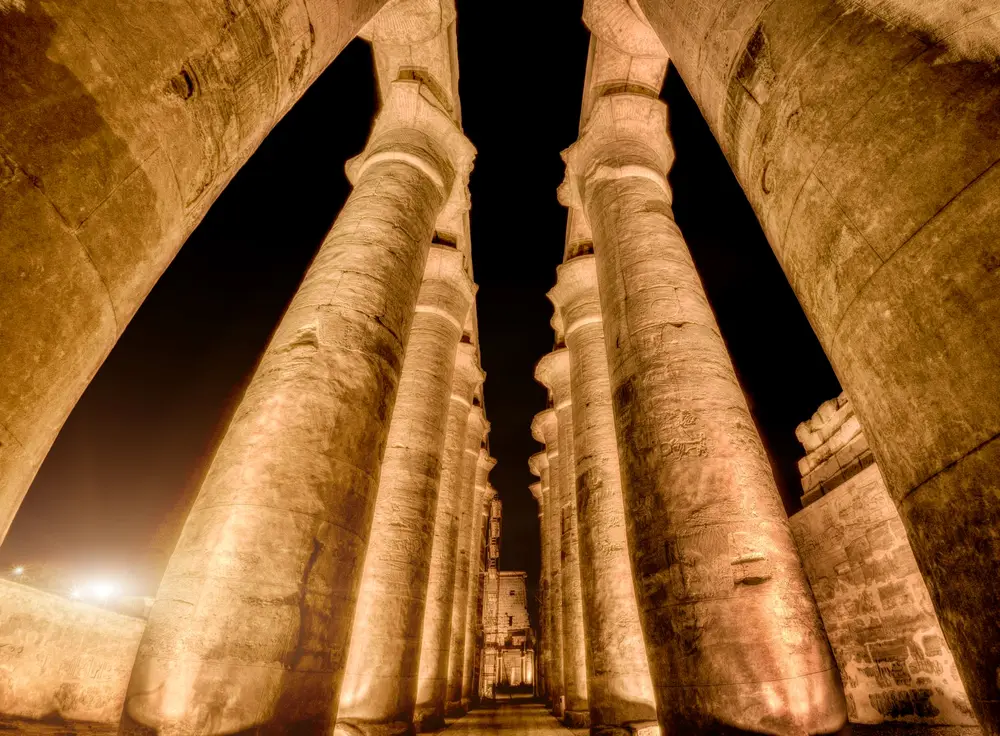
The Colonnade of Amenhotep III is a monumental 100-metre processional hallway from the New Kingdom — the grand entrance to the temple.
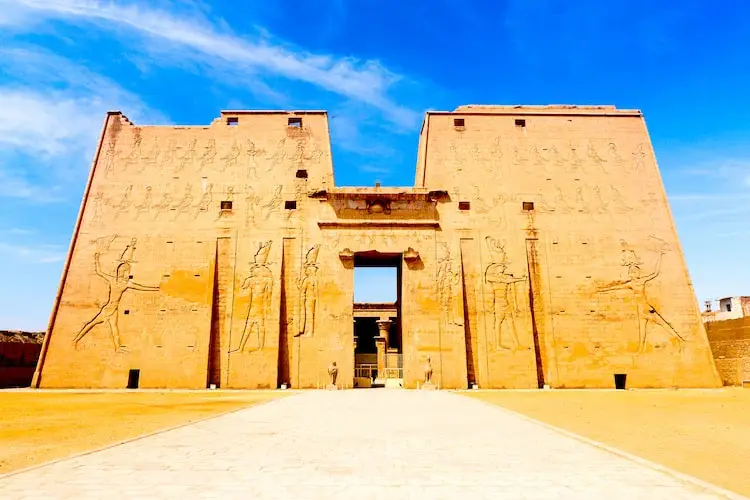
The best-preserved temple in Egypt, and the second largest after Karnak. Built under the Ptolemies between 237 and 57 BC, then buried under sand and silt for centuries — which is exactly why its roofs, halls and sanctuaries survived almost intact. Walking in, you see a temple as the Egyptians saw it.
Edfu was the legendary battlefield of Horus and Seth — order against chaos. The whole saga is carved along the temple's outer walls.
No big cruise ship: the Nile at the pace of the wind, with fields, palm groves and villages sliding past.
Where Egypt's temples came from. About 65 km north of Aswan, the Nile squeezes between steep sandstone cliffs — this was the country's main sandstone quarry, ancient Kheny.
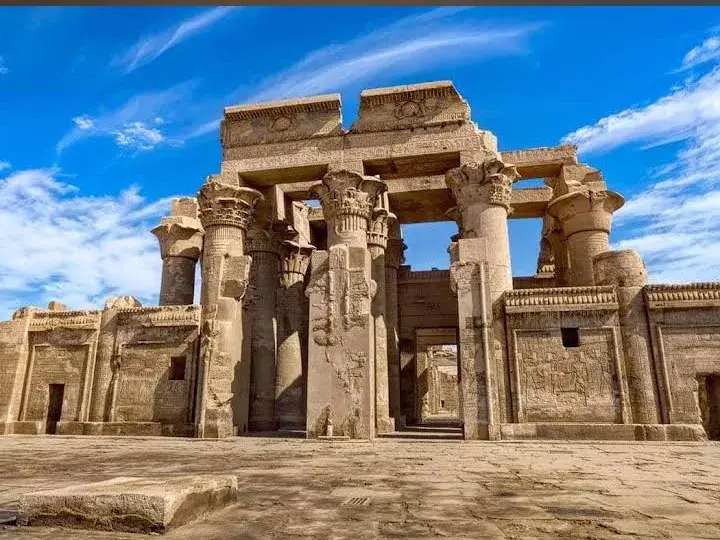
A temple split in two. On a bend of the Nile 45 km north of Aswan, this Ptolemaic temple (180–47 BC, with Roman additions) is perfectly symmetrical: two gates, two courts, two hypostyle halls, two sanctuaries — for two gods.
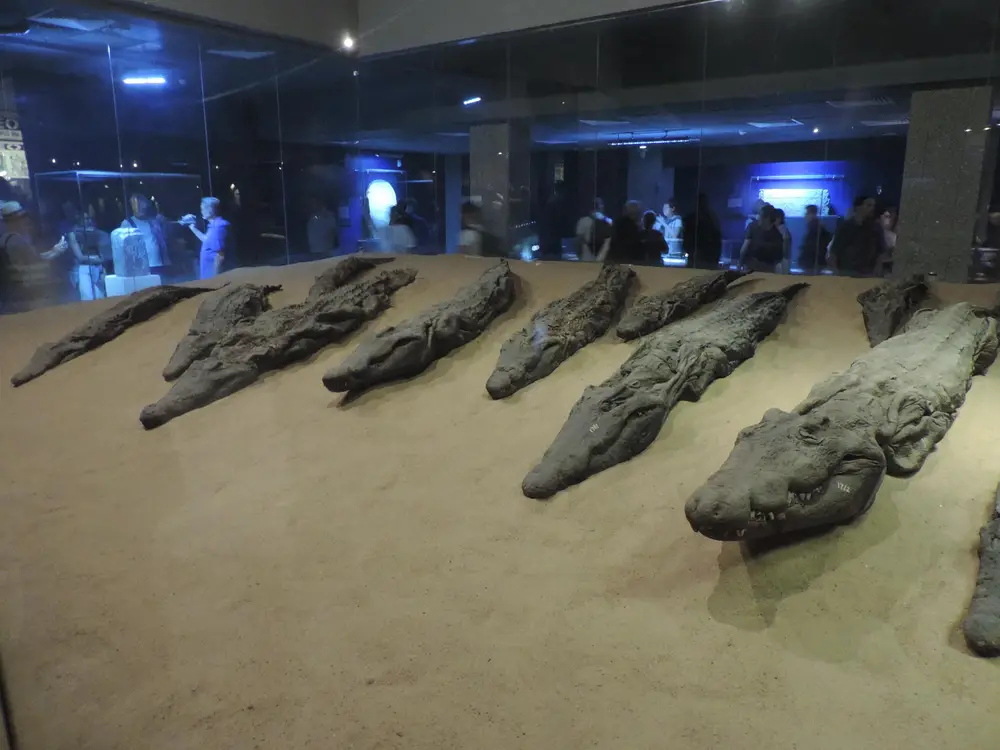
Right by the exit, included in the temple ticket. Dozens of mummified Nile crocodiles — from hatchlings to giants over 4 m — plus clay coffins, eggs and offerings to Sobek. Official page.
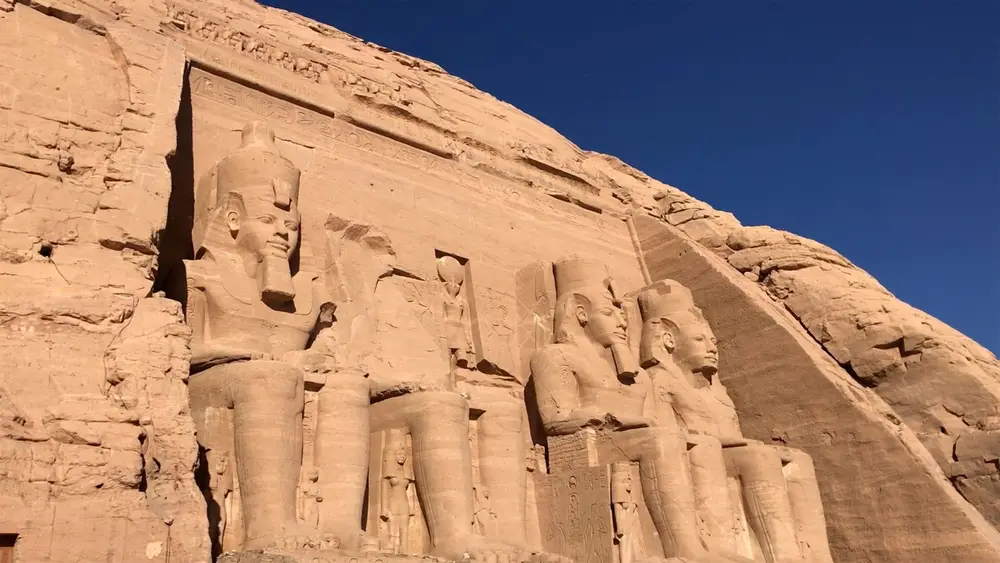
Ramesses II's statement in stone. Two temples carved straight into a sandstone cliff in the 13th century BC, at the edge of Nubia, to show everyone coming up the Nile who was in charge.
On 22 February and 22 October, the rising sun shoots 55 m into the sanctuary and lights three of the four seated gods — Ra-Horakhty, Amun-Ra and Ramesses deified. Ptah, god of the underworld, stays in the dark.
In the 1960s the Aswan High Dam was about to drown the temples under Lake Nasser. From 1964 to 1968 a UNESCO campaign cut them into more than 1,000 blocks of up to 20 tonnes and rebuilt them 65 m higher on an artificial hill — keeping the solar alignment working. The project led to the creation of the World Heritage Convention.
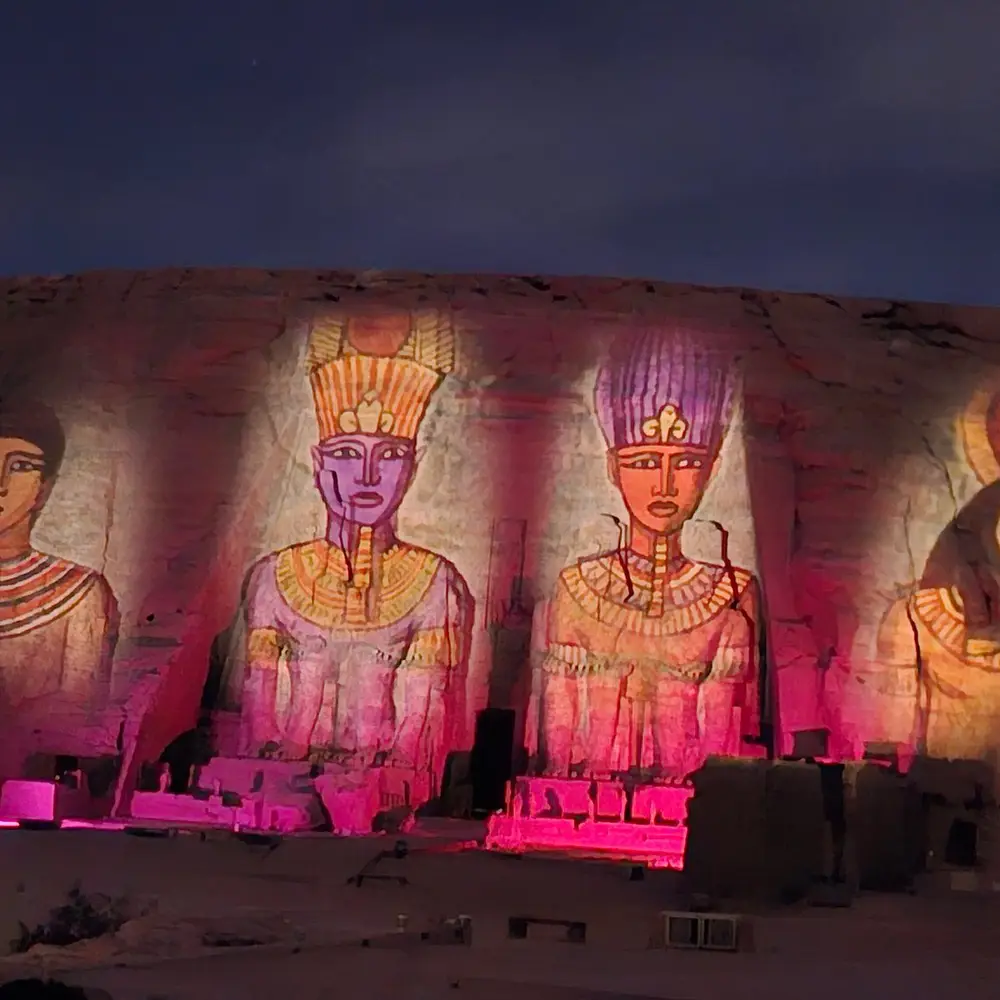
At night, the story of Ramesses and Nefertari is projected onto the façades. Bring a warm layer — the desert gets cold.
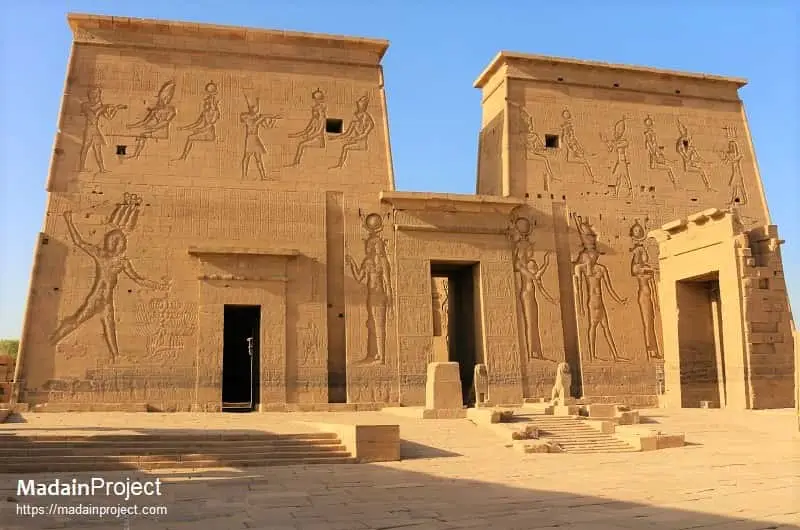
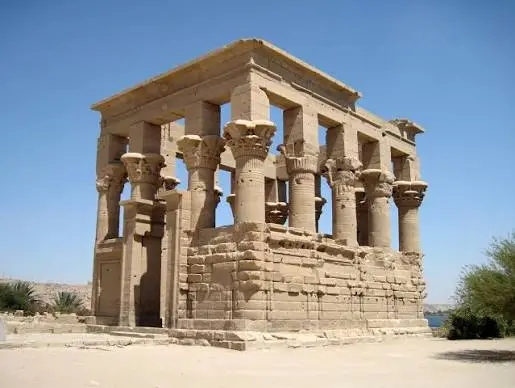
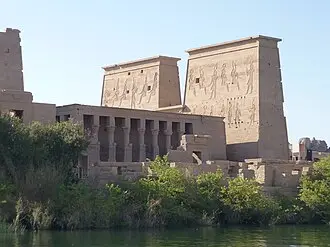
An island temple reached by boat, dedicated to Isis, goddess of magic, motherhood and healing. It was one of the last places where the old Egyptian religion was practised — until the 6th century AD.
Egypt's gateway to Africa and the heart of Nubia. Ancient Swenett is slower and gentler than Cairo or Luxor: golden dunes running straight into the blue Nile, granite islands and white feluccas.
For thousands of years it was a trading post and a granite quarry; today it's a hub for rescued monuments and the classic starting point for Nile cruises.
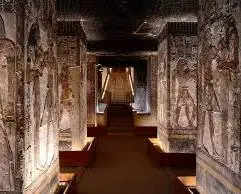
The peak of Egyptian funerary art. Cut into the limestone cliffs of Luxor's West Bank during the New Kingdom (c. 1539–1075 BC), these tombs plunge into the rock to protect the pharaohs and guide their souls through the afterlife. Walls and ceilings still burn with original colours: star maps, gods and sacred texts.
Easy choices
Avoid
Tips
Founded by Alexander the Great in 332 BC, capital of the Ptolemies and Cleopatra, home of the Lighthouse and the great Library. Today a breezy Mediterranean city of corniches and cafés.
A green island in the middle of the Nile, in the heart of Cairo. Tree-lined streets, embassies in old villas, galleries, cafés and restaurants — calm by Cairo standards, central, and one of the nicest places to stay in the city.
7,000 years of Egypt in one walk — from prehistory through the pharaohs, Greeks, Romans, Copts and Islamic dynasties to today. The first museum in the Arab world to tell the whole story in one timeline. nmec.gov.eg
The highlight. A dim, underground hall designed like the Valley of the Kings, home to 22 royal mummies — Ramesses II and Hatshepsut among them. They arrived from the old Tahrir museum in 2021 during the televised Pharaohs' Golden Parade. Each is shown with its coffin and CT scans that tell its life story.
Suggested time: 3 h.
Cairo before Cairo: a walled quarter built on the Roman Babylon Fortress, where churches, a synagogue and a mosque stand a few steps apart.
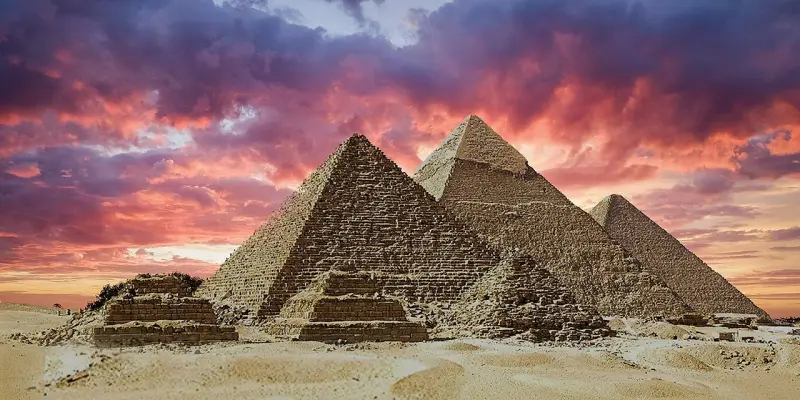
The last surviving Wonder of the ancient world. Pyramid building peaked here on the Giza Plateau under the 4th Dynasty, about 4,500 years ago. Fun fact: neighbouring Sudan (ancient Kush) actually has more pyramids than Egypt.
Carved straight out of the bedrock: a lion's body with a king's head wearing the royal nemes. About 73 m long and 20 m high, it faces due east, toward the rising sun.
The world's largest museum devoted to a single civilisation, fully opened in November 2025 beside the Giza pyramids. A 3,200-year-old, 11 m statue of Ramesses II greets you in the atrium, then a monumental Grand Staircase lined with kings and gods climbs toward a window framing the pyramids.
Not in the original agenda — added as an option.